
Book 3 of the Grade 3 series
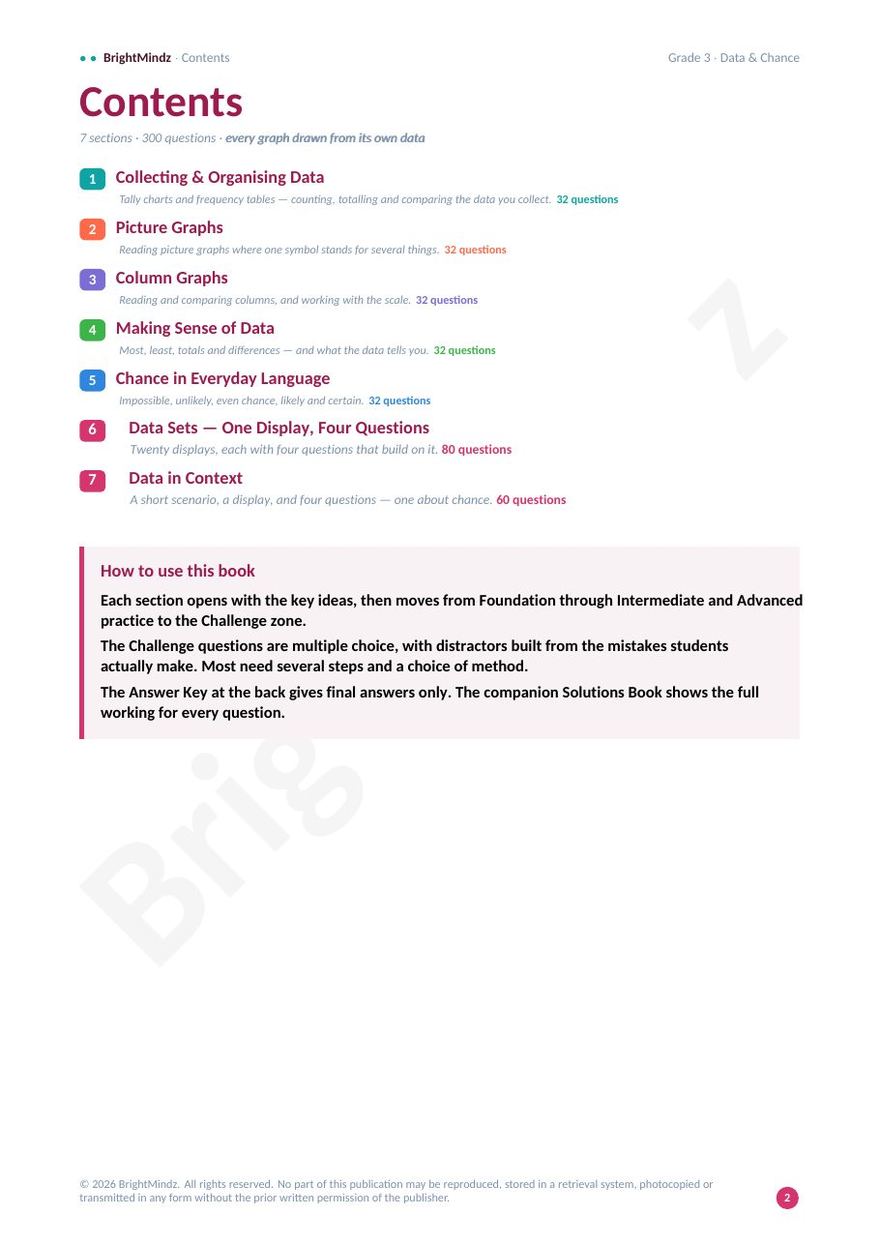
Tally charts, picture graphs, column graphs, chance language — and 35 data sets where one display drives four questions, the way a scholarship paper asks them. 300 questions in all.
Answer key included. Full worked solutions come in the companion Solutions Book.
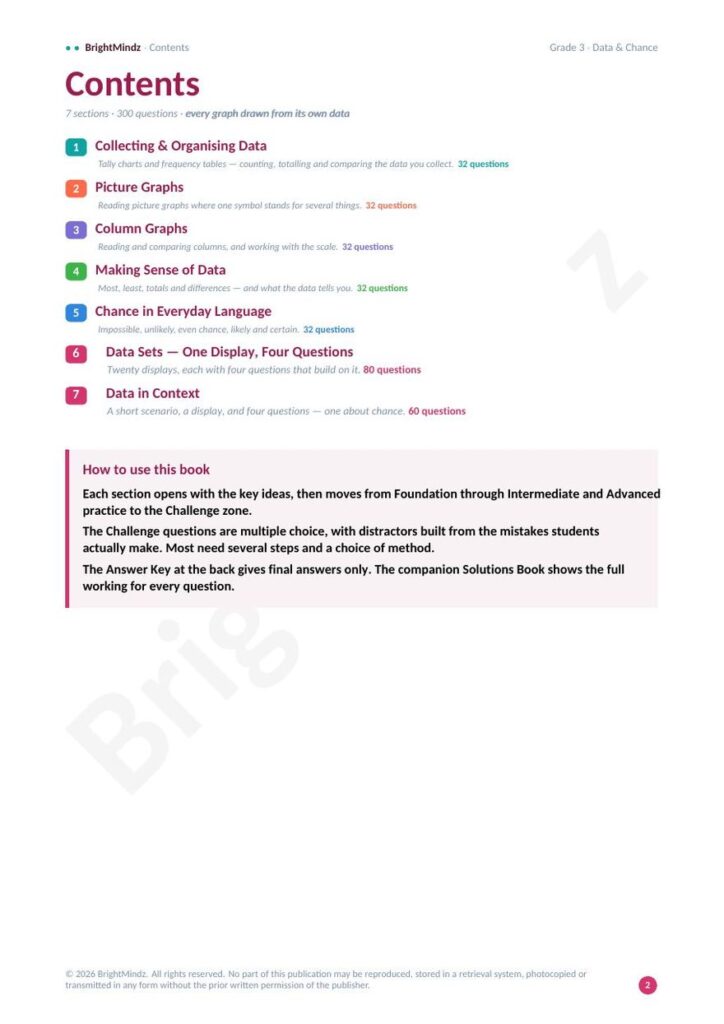
Five sections teach the skills one at a time. The last two put them together: a single display with four questions hanging off it, which is how a test paper uses data.
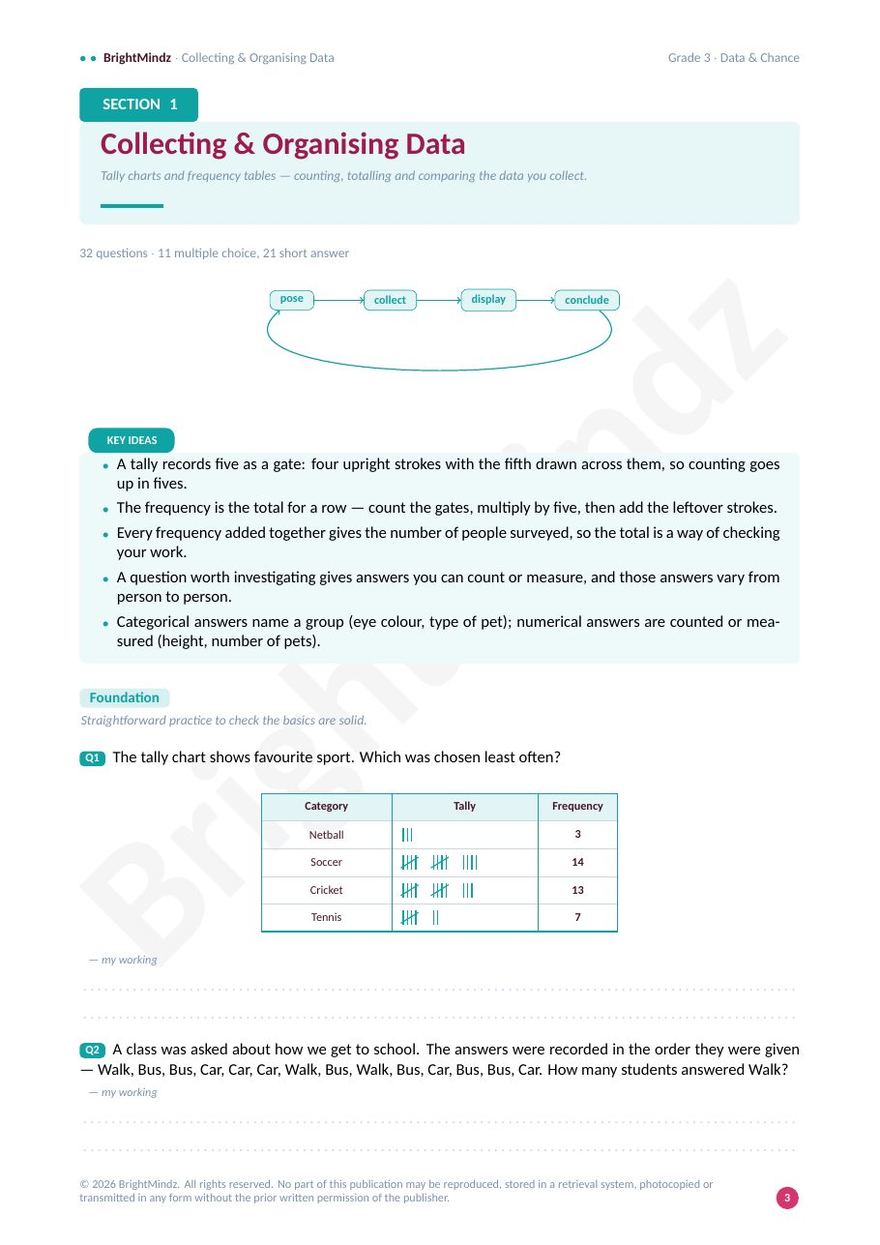
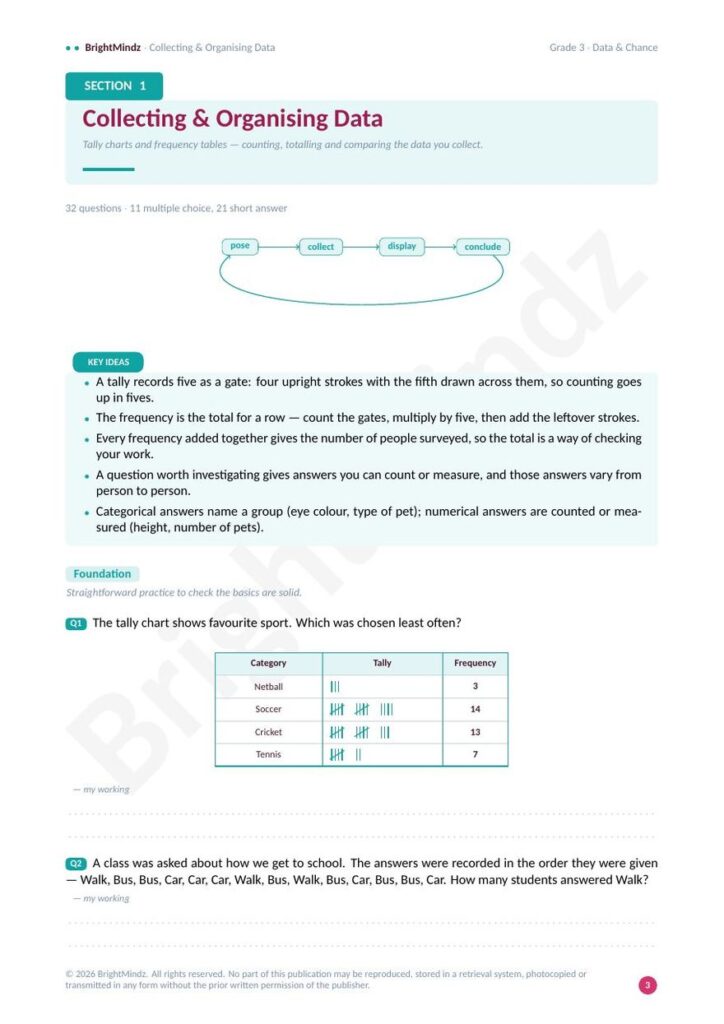
Tally charts and frequency tables — counting, totalling and comparing the data you collect.
Reading picture graphs where one symbol stands for several things.
Reading and comparing columns, and working with the scale.
Most, least, totals and differences — and what the data tells you.
Impossible, unlikely, even chance, likely and certain.
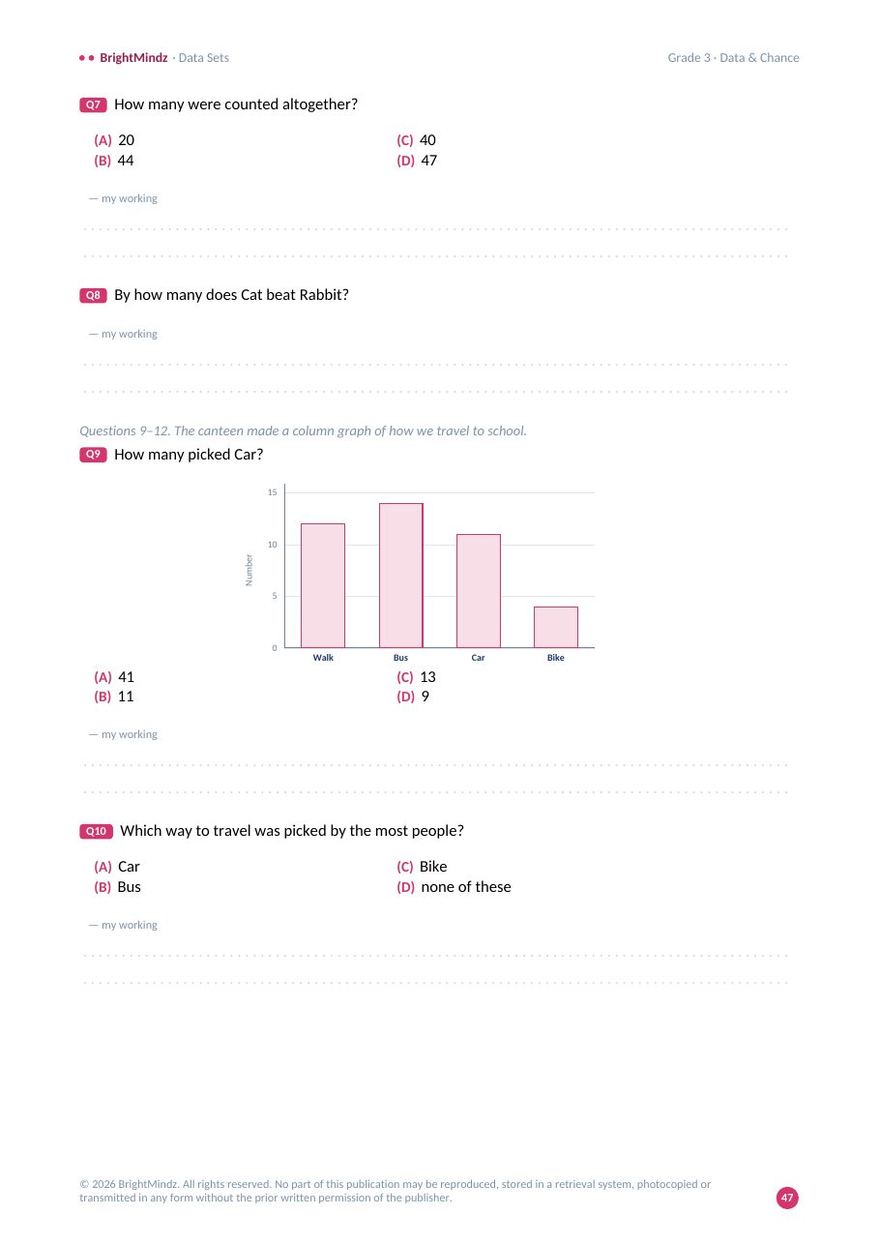
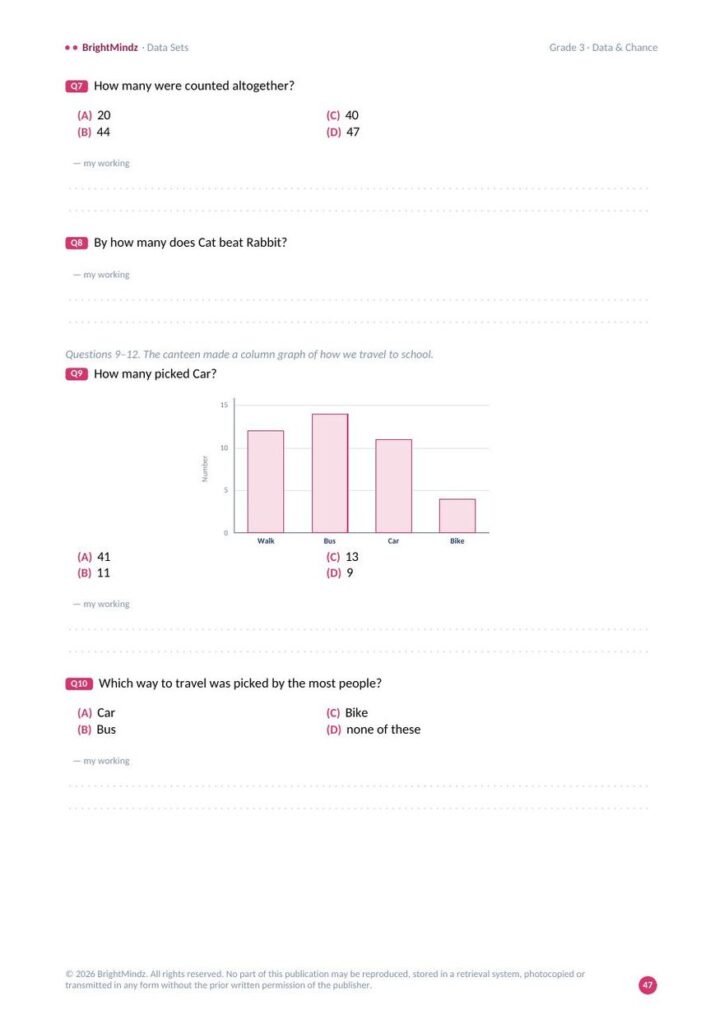
Twenty displays, each with four questions that build on it.
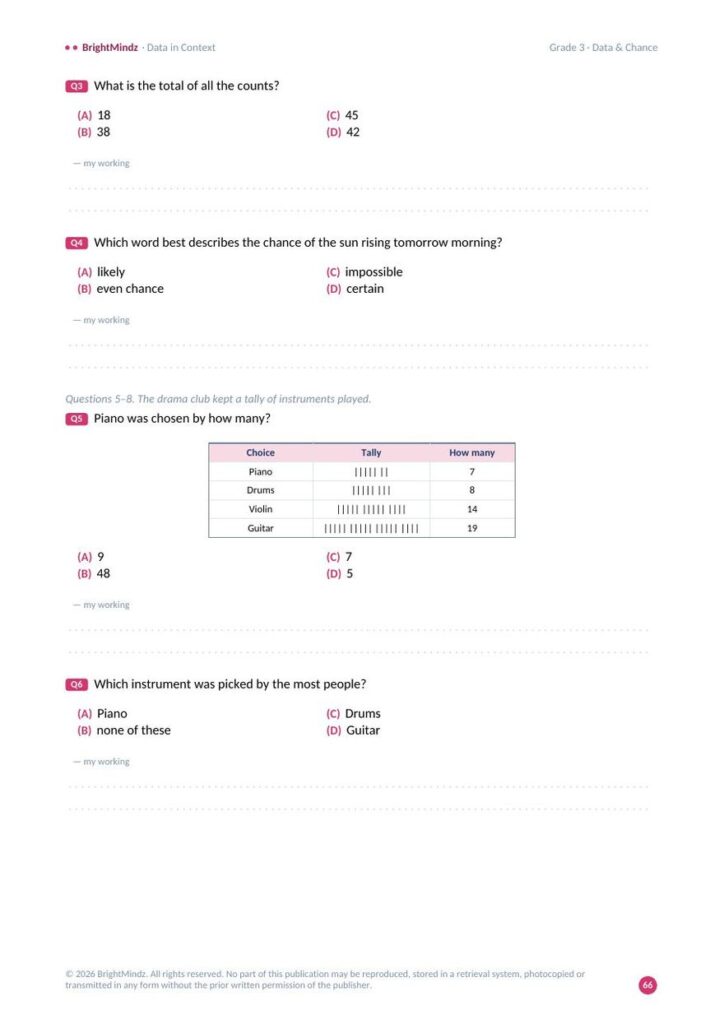
A short scenario, a display, and four questions — one about chance.
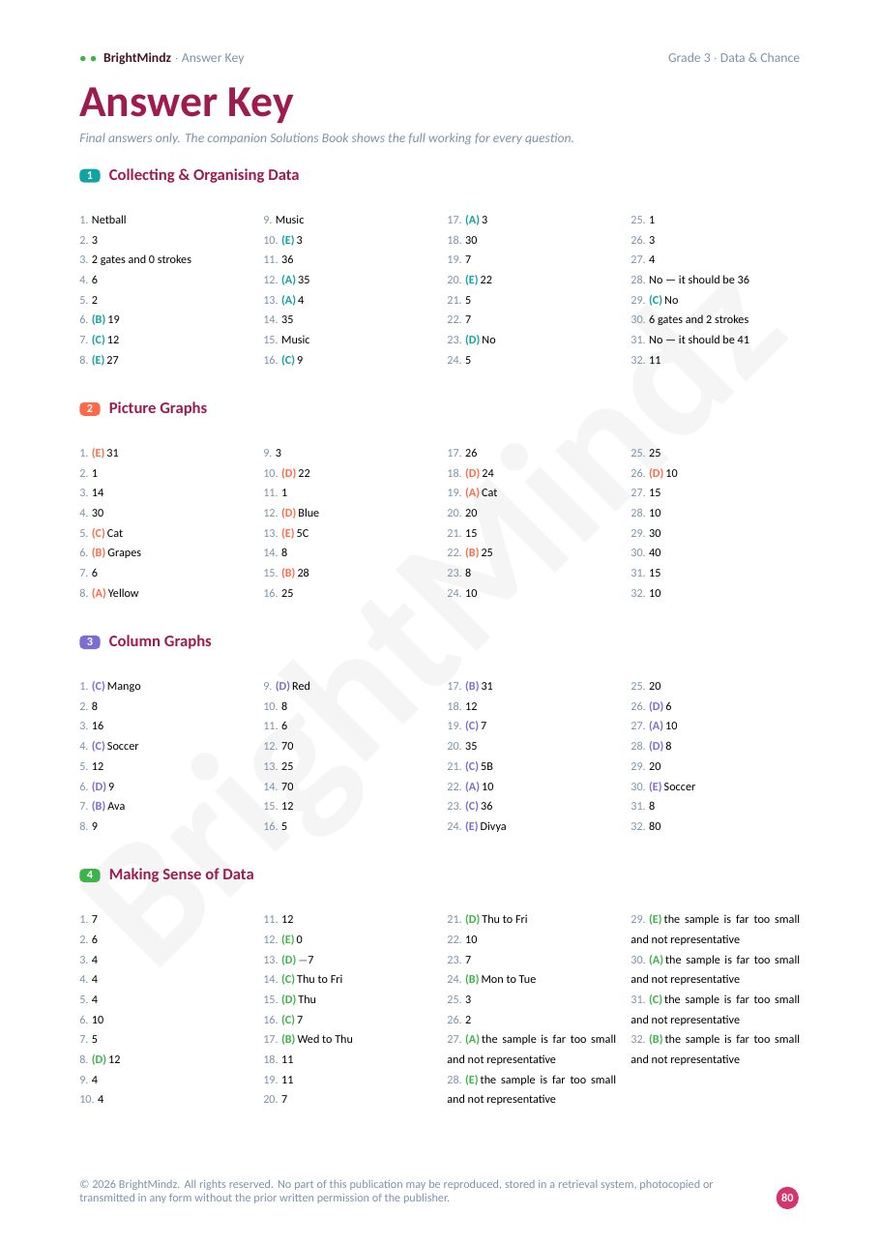
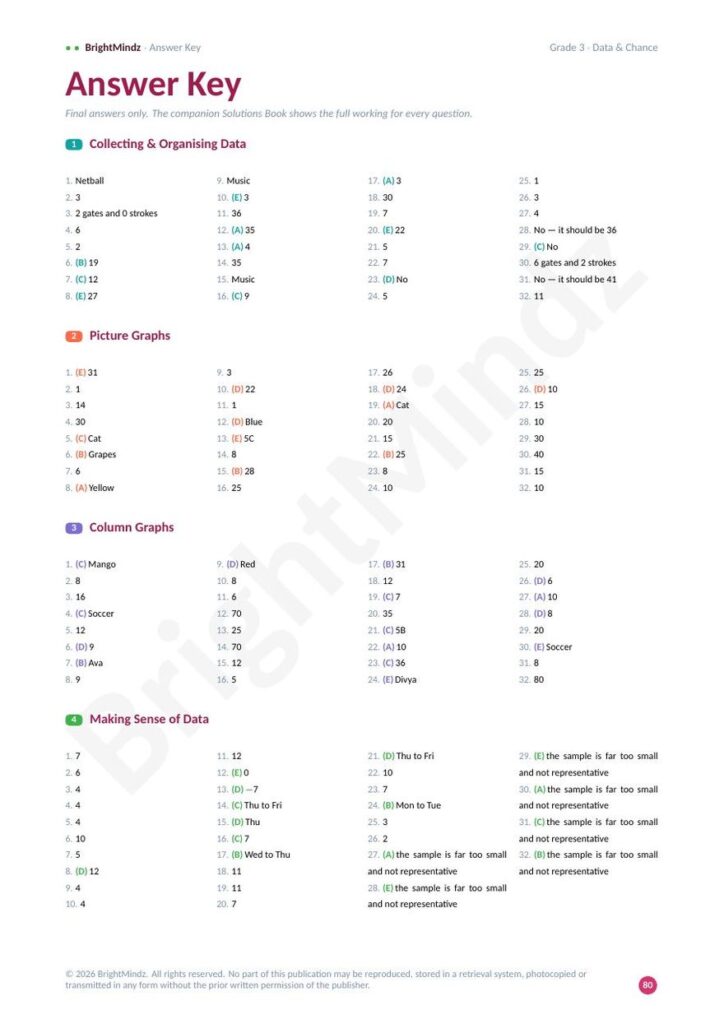
Final answers for all seven sections, at the back of the book.
A scholarship paper rarely asks one question about a graph. It asks four, and misreading the display once costs all four marks. Sections 6 and 7 practise exactly that.
Straightforward practice to check the basics are solid — read one row, count one tally.
Two ideas together, and the display starts carrying part of the question.
Work back from a total, or say what happens after more people are added.
Multiple choice with distractors built from the mistakes students actually make.
Miss Lee's class recorded favourite sport in a table. Four questions follow the one display — read a count, name the most popular, total the survey, then find a difference.
Where a picture graph is used, the first question always asks what one symbol is worth — the step most students skip.
Each set ends with a chance question: is picking the one red counter from a bag of nine blue and one red impossible, unlikely, even chance, likely or certain?
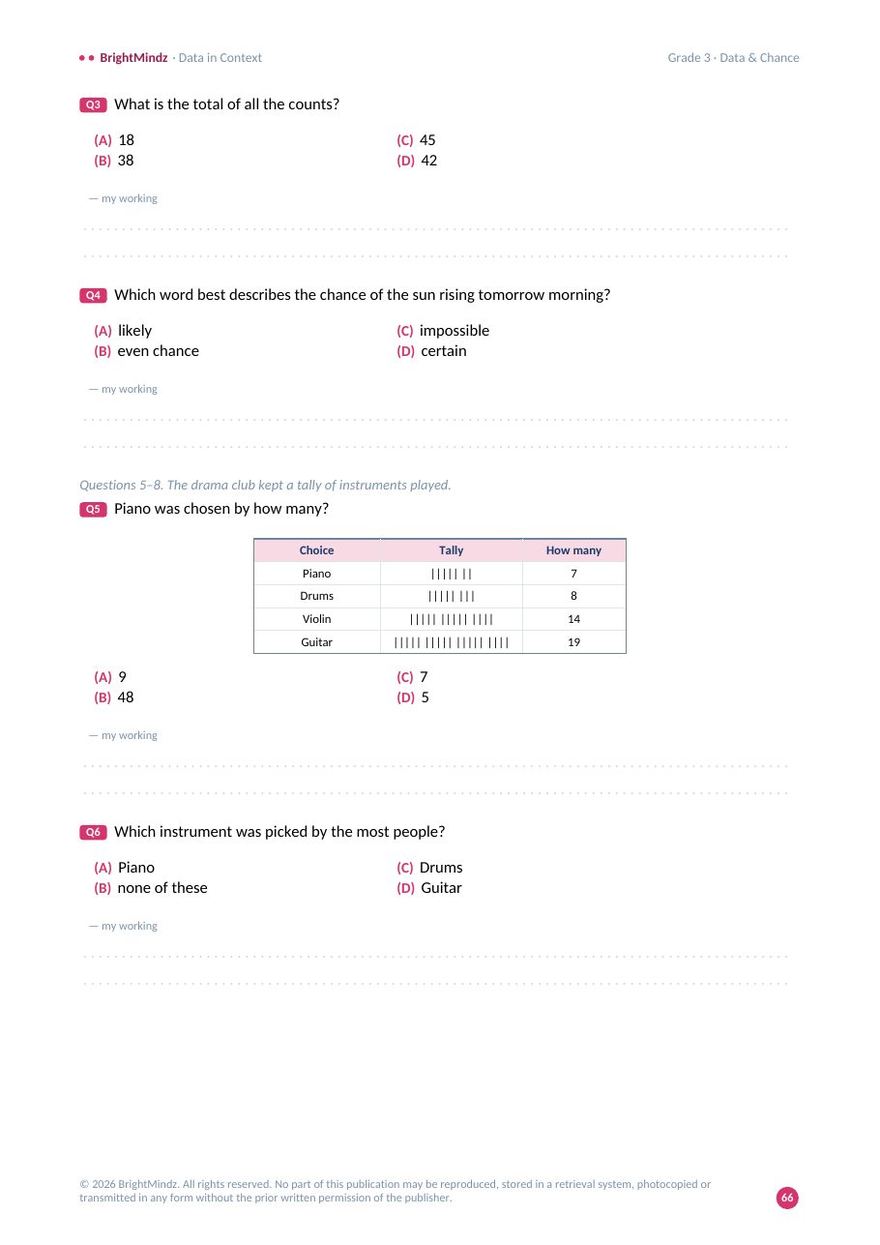
Six pages from the book, exactly as they print. Turn the pages, or jump straight to one.
Book 3 of the Grade 3 series
Six pages of 82. The full book carries all 300 questions and the answer key.
Buy the full book
The last two sections are. A test paper gives one display and asks four questions from it, so 35 of those sets are included — 140 questions in total — with four-option multiple choice throughout.
The first five sections teach the skills and stay gentle. Sections 6 and 7 are pitched at a student working near the top of the year, with two-step questions and distractors built from real mistakes.
Every one of the 35 data sets uses a different scenario, and the displays rotate through tally charts, picture graphs, column graphs, tables and dot plots. Question wordings are drawn from a large pool so the same phrasing rarely appears twice.
It includes an answer key with the final answer to every question. Full worked solutions are in the companion Solutions Book, sold separately for A$45 or bundled with this book for A$90.
The standard licence covers one family or one classroom. For whole-school or tutoring-centre use, get in touch about a site licence.
Book 1 is Numbers and Book 2 is Measurement & Space.
Seven sections, 300 questions, and 35 data sets that ask the way a test asks.
Answer key included · Print-ready A4 · Download link sent on purchase