Book 3 of the Grade 3–4 series
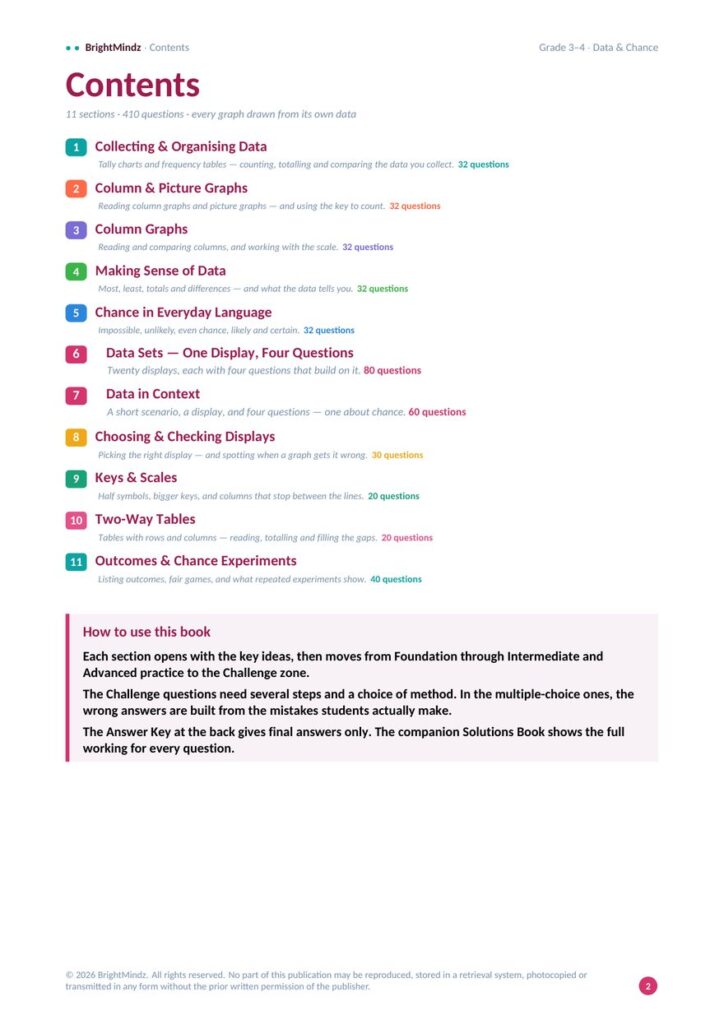
Tally charts, picture and column graphs, two-way tables, chance language and chance experiments — plus 35 data sets where one display drives four questions, the way a test paper asks them. 410 questions in all.
Answer key included. Or get all four Grade 3–4 books for A$100.62.
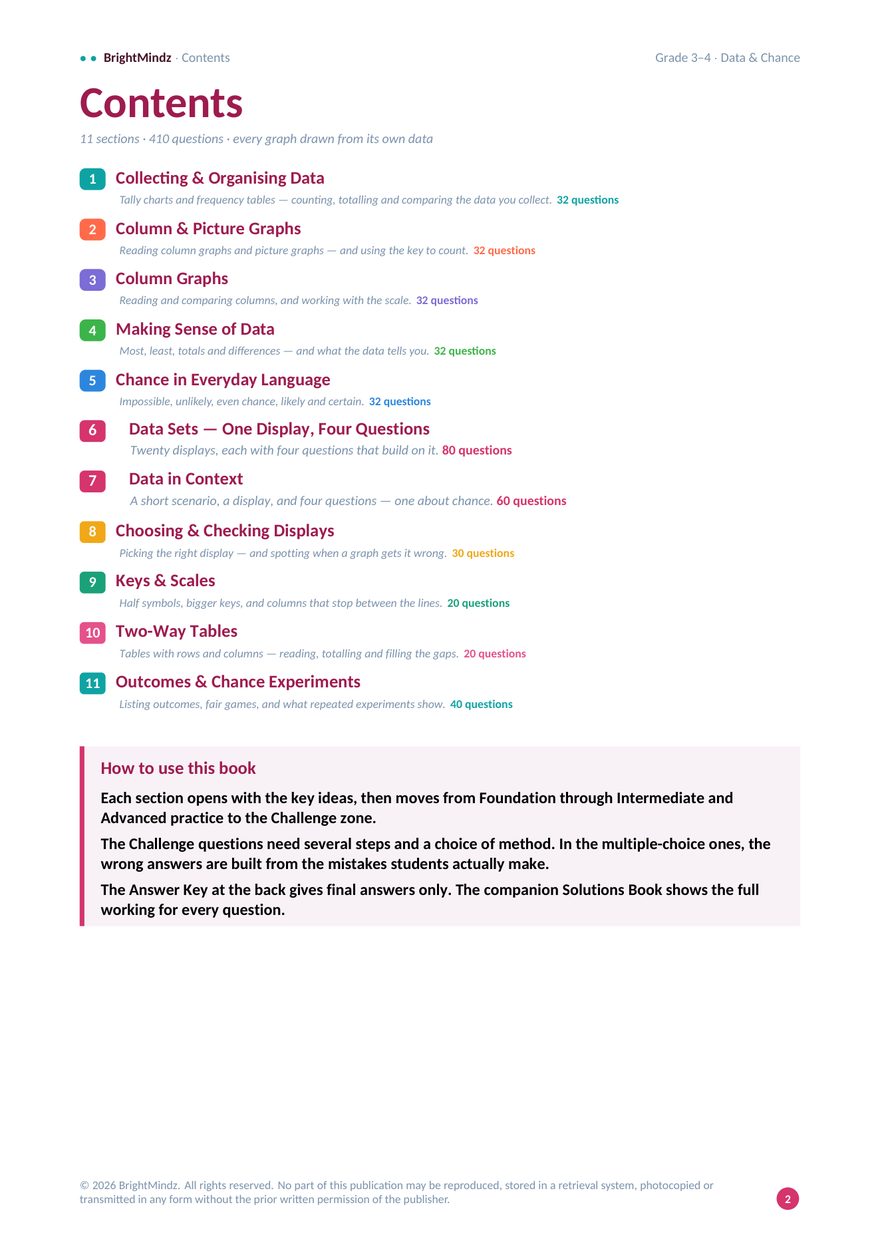
The first five sections teach the skills one at a time. Sections 6 and 7 put them together — a single display with four questions hanging off it, which is how a test paper uses data. Sections 8 to 11 take the Grade 4 step: choosing and checking displays, keys and scales, two-way tables and chance experiments.
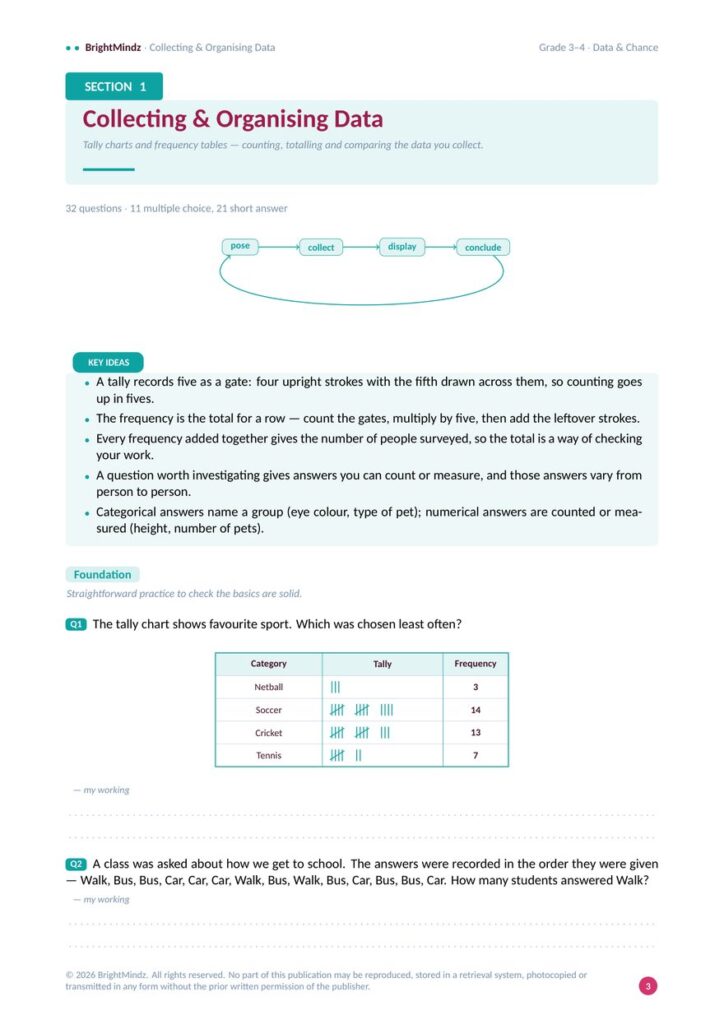
Tally charts and frequency tables — counting, totalling and comparing the data you collect.
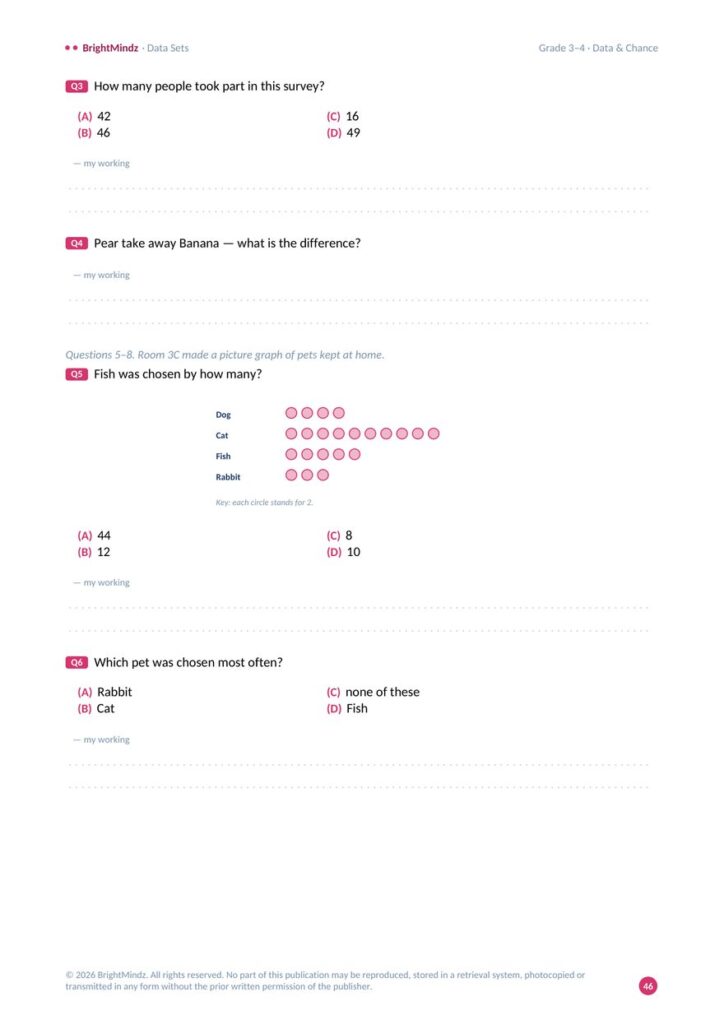
Reading column graphs and picture graphs — and using the key to count.
Reading and comparing columns, and working with the scale.
Most, least, totals and differences — and what the data tells you.
Impossible, unlikely, even chance, likely and certain.
Twenty displays, each with four questions that build on it.
A short scenario, a display, and four questions — one about chance.
Picking the right display — and spotting when a graph gets it wrong.
Half symbols, bigger keys, and columns that stop between the lines.
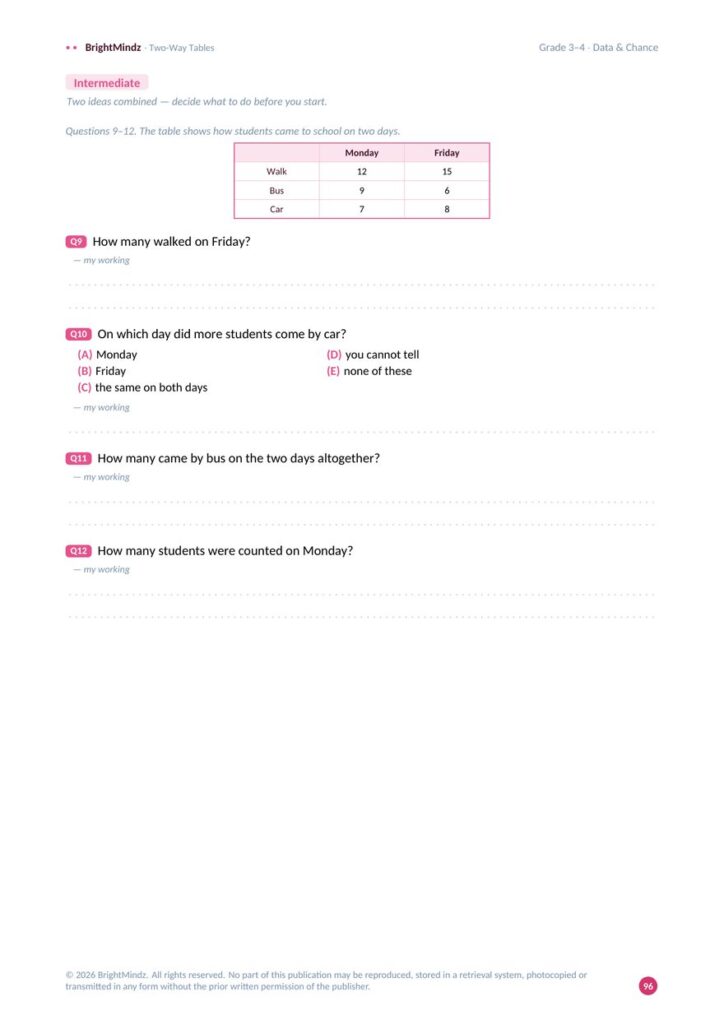
Tables with rows and columns — reading, totalling and filling the gaps.
Listing outcomes, fair games, and what repeated experiments show.
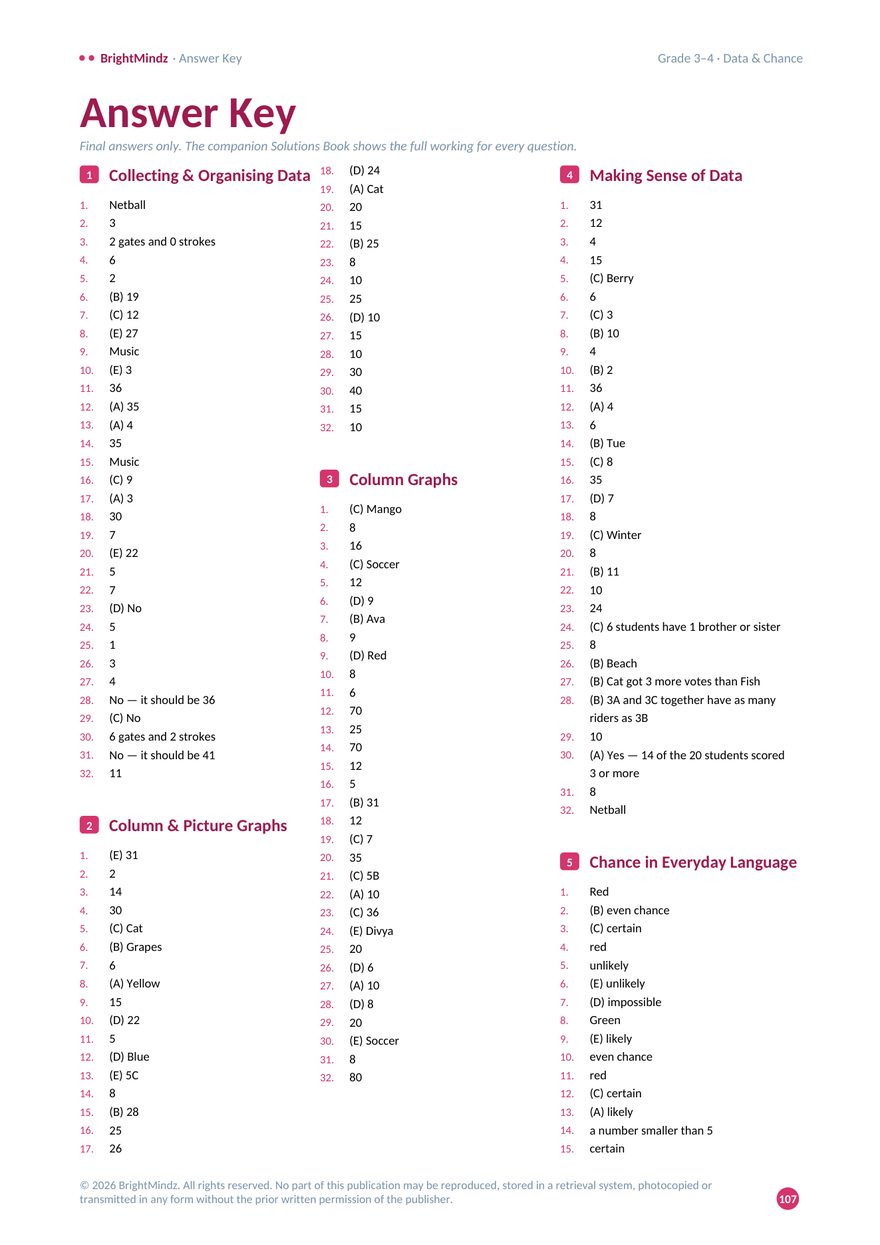
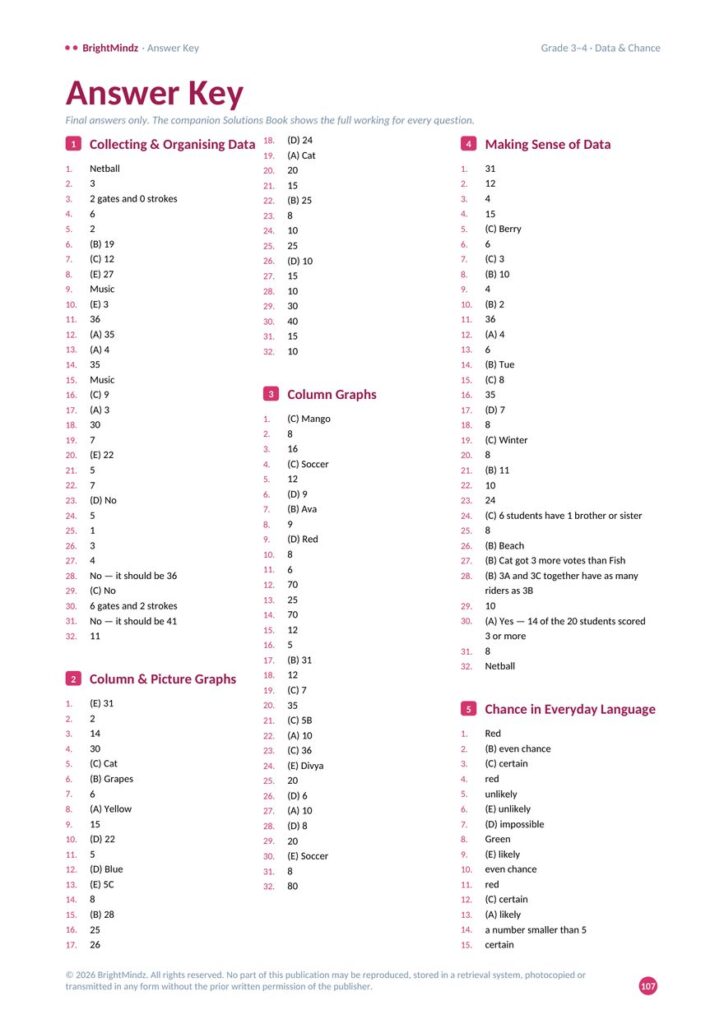
Final answers for all eleven sections, at the back of the book.
A test paper rarely asks one question about a graph. It asks four, and misreading the display once costs all four marks. Sections 6 and 7 practise exactly that — and every section climbs through four levels.
Level 1 of 4
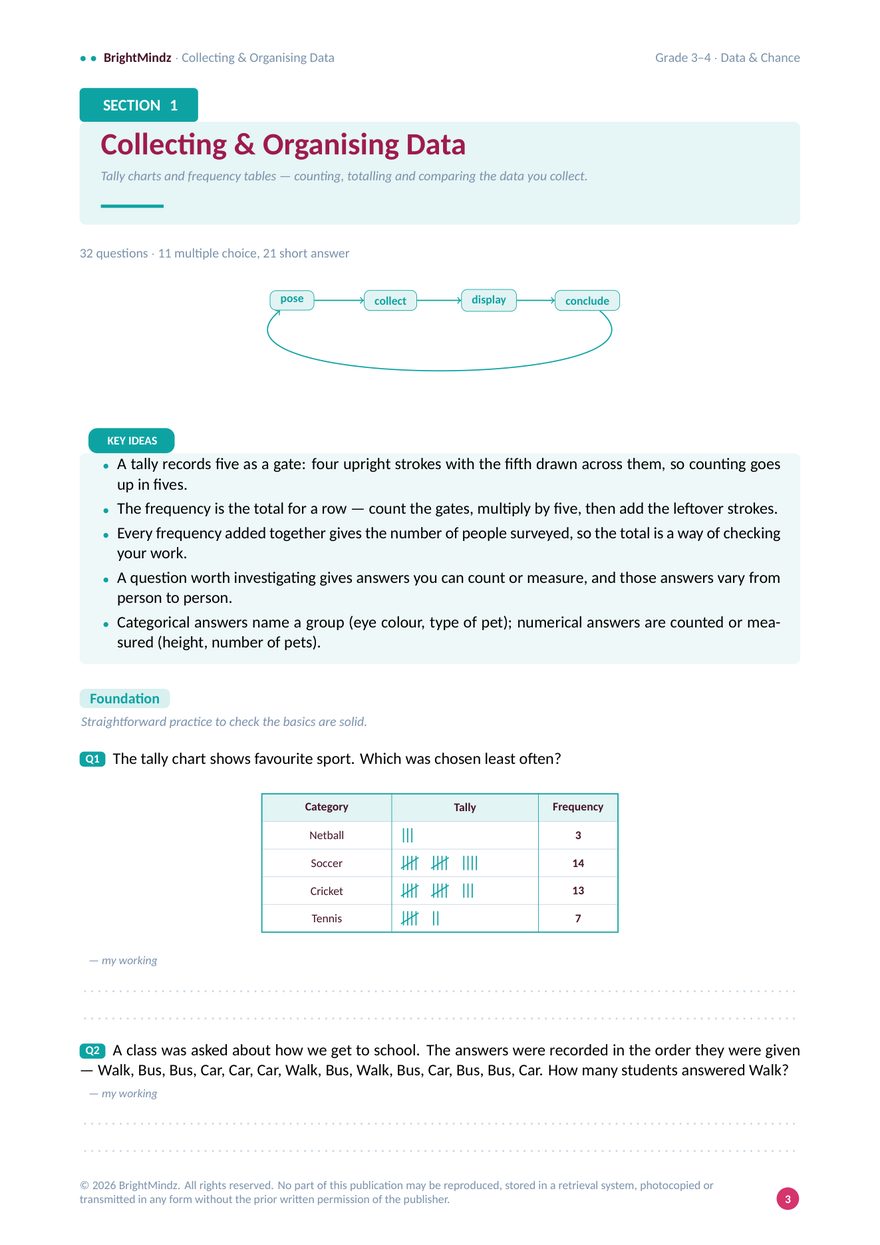
Straightforward practice to check the basics are solid — read one row, count one tally.
Level 2 of 4
Two ideas together, and the display starts carrying part of the question.
Level 3 of 4
Work back from a total, or say what happens after more people are added.
Level 4 of 4
Several steps and a choice of method, with distractors built from the mistakes students actually make.
The tally chart shows favourite sport. Which was chosen least often?
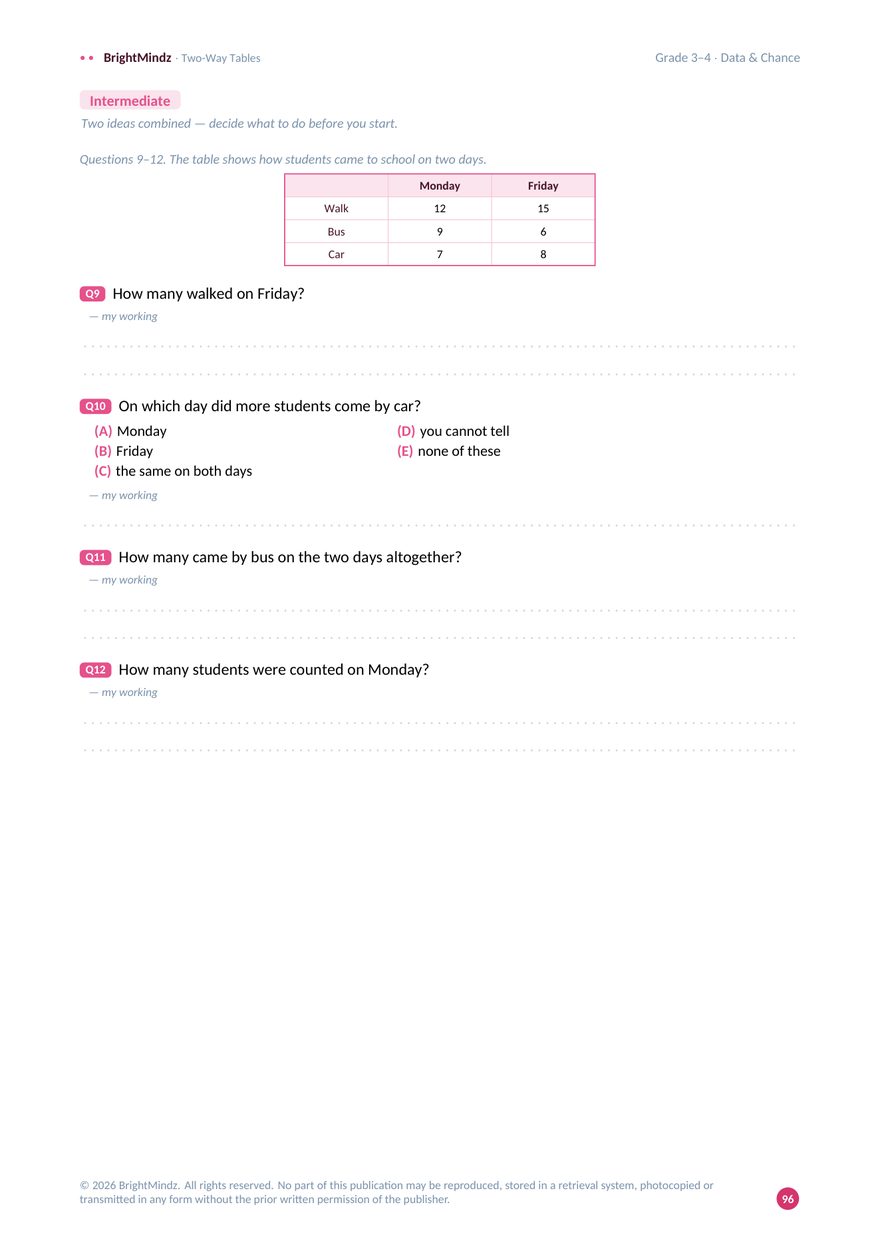
The table shows how students came to school on two days.
Zac drew 3 and a half symbols to show 7 students. What key did he use?
Six pages from the book, exactly as they print. Turn the pages, or jump straight to one.
Book 3 of the Grade 3–4 series
Six pages of 110. The full book carries all 410 questions and the answer key.
Buy the full book
4 Question Books, one for each strand, built the same way: key ideas, levelled practice in every section, and an answer key at the back. $27.95 each, or $100.62 for the full set.
Both. Sections 1 to 7 cover the Year 3 data and chance content; Sections 8 to 11 add the Year 4 steps — choosing displays, many-to-one keys and scales, two-way tables and chance experiments. Every section climbs from Foundation to the Challenge zone.
Sections 6 and 7 are built for it. A test paper gives one display and asks four questions from it, so 35 of those sets are included — 140 questions in total.
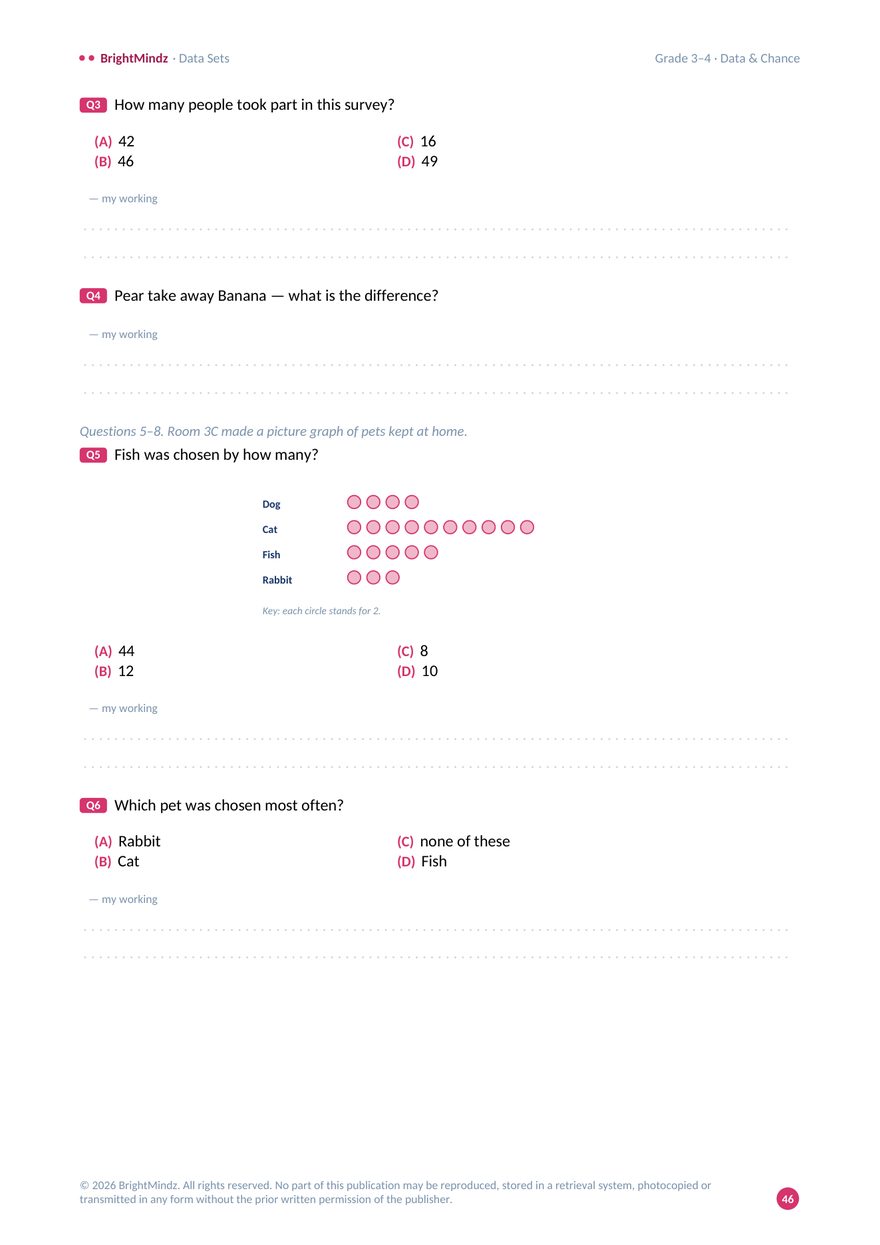
Every data set uses a different scenario, and the displays rotate through tally charts, picture graphs, column graphs and tables. Question wordings are drawn from a large pool so the same phrasing rarely appears twice.
No. It includes an answer key at the back with the final answer to every question, but not the step-by-step working. The answer key comes with the book, so there’s nothing to buy separately.
The other Grade 3–4 books are Algebra, Measurement & Space and Numbers, all built the same way. Buy all 4 together and save $11.18 on the set.
Eleven sections, 410 questions, and 35 data sets that ask the way a test asks.
Answer key included